

Generative AI has made it faster, cheaper, and easier to produce text, images, video, websites, and other creative work. But as the volume of generated content increases, something else is becoming scarce: intention, judgment, identity, responsibility, and the sense that a real person actually thought about what they were making. During the first years of the generative AI boom, much of the discussion revolved around one question: “Will AI replace designers, writers, programmers, illustrators, and other creative professionals?” By 2026, that may no longer be the most interesting question.
Production itself has become easier. But producing something that genuinely means something is still difficult. That gap has helped popularize a term that is becoming increasingly familiar: AI Slop.
What is AI Slop?
AI Slop does not simply mean “content made with AI.” The term is more often used to describe content produced at scale with little meaningful human judgment behind it—content that is generic, repetitive, superficial, or created primarily to occupy feeds and generate engagement metrics. A 2026 academic analysis offers an especially interesting interpretation: AI Slop does not necessarily need to communicate meaning as its primary function. In some cases, its function is operational—to generate clicks, retention, shares, and other signals that feed platform algorithms. [1]
Another recent study examining AI-generated viral video production in China found increasingly systematized workflows: creators analyze successful formats, reproduce structures, rapidly test variations, and operate networks of accounts at scale. In this environment, creativity begins to function partly as an industrial optimization problem. [2]
The result may be technically polished: a beautiful image, a grammatically flawless piece of writing, a video with cinematic lighting, or a modern-looking website. Yet it can still feel as though something is missing. Technical quality and meaning are not the same thing.

The problem is not AI. It is the absence of direction.
There is an important distinction between work created with AI and work in which AI has replaced meaningful direction and judgment. A designer might use AI to research references, explore concepts, generate variations, organize information, or accelerate repetitive tasks. An art director might generate dozens of early concepts and discard 95% of them. A developer might use a model to produce repetitive code, then personally review architecture, accessibility, security, and actual behavior. A writer might use AI to organize research while rebuilding the final argument from the ground up.
In each case, AI supports the work without controlling the process. The problem begins when the tool stops being an instrument and starts replacing decisions, context, and judgment. That is where AI slop begins.
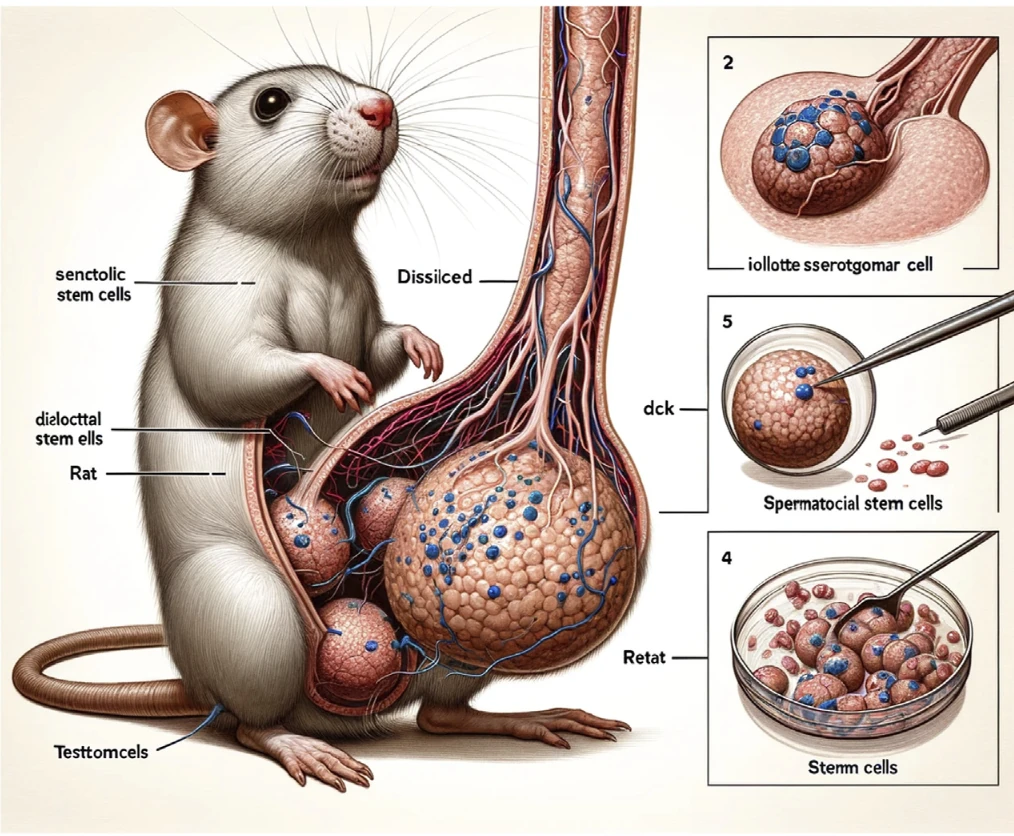
Midjourney AI; prompted by Xinyu Guo and/or Dingjun Hao. CC BY 4.0. Resized and converted to WebP; no content changes.
Abundance is changing where value comes from
For a long time, part of the value of creative work came from the difficulty of execution. Illustrations required drawing skills; campaigns needed teams; video meant shooting and editing. Producing dozens of concepts took time. AI has lowered some of those barriers, making routine production less scarce and putting pressure on its economic value.
Understanding the real problem, the organization behind it, and the people involved is still difficult. So is defining a strategy, recognizing when something feels wrong, or taking responsibility for a decision. Generating hundreds of possibilities does little to resolve those questions. Someone still needs the judgment to turn them into a coherent direction.
Creative work is shifting from production toward judgment
This may become one of the most important changes for creative professionals over the next several years. A large part of creative work used to revolve around the question: “How do we make this?” Increasingly, the question becomes: “What is actually worth making?” And then: “Which of these hundreds of possibilities really solves the problem?” That shift increases the value of capabilities such as creative direction, curation, strategic thinking, analysis, communication, and the ability to connect multiple disciplines.
The World Economic Forum places AI and Big Data among the fastest-growing skills through 2030. At the same time, it also identifies creative thinking, analytical thinking, resilience, flexibility, leadership, curiosity, and lifelong learning as capabilities whose importance is expected to continue rising. [3]
The distinction may matter less between people who use AI and those who do not than between people who simply generate output and those who can direct it using experience and expertise.
The report reflects employers’ expectations, not a guarantee of outcomes for every occupation. Technical and human capabilities can rise together. [3]
In our own work at Go 5tudio, this distinction is practical rather than philosophical. AI can shorten research, exploration and production, but the difficult decisions remain: what matters, what to remove, what fits the client, and what we are willing to stand behind.
The paradox of generic perfection
There is also an aesthetic problem. For decades, sophisticated visual production was relatively difficult. As a result, certain characteristics—perfect lighting, cinematic composition, polished rendering, immaculate photography—served as indirect signals of investment and quality. AI has made many of those signals cheap. Anyone can now type: “cinematic lighting, premium editorial photography, luxury aesthetic” and receive something visually impressive within seconds. But when millions of people do the same thing, another phenomenon appears: perfection starts to look ordinary.
Interfaces begin to share the same visual language. Campaigns follow similar structures. Writing develops the same rhythm. Illustrations repeat familiar patterns. Videos adopt the same hyper-polished cinematography. What once felt extraordinary begins to feel artificially familiar. Professional discussions are already reflecting some of this saturation. Designers report receiving AI-generated assets that look finished at first glance but are difficult to edit, print, adapt, or integrate into real production systems. [4]
Others describe clients who begin with automatically generated solutions and later seek professional help after encountering functional or strategic limitations. These reports are anecdotal. They are not evidence that the entire market has already reversed direction. But they are interesting signs of a new professional dynamic. [5]
Human presence may become more valuable
Companies have spent years polishing scripts, photography, video and customer interactions. When almost any organization can reproduce that finish at scale, however, the result can feel impersonal. A direct conversation on camera, documentary photography, or a glimpse of decisions made behind the scenes may tell us more about who is actually involved.
This does not mean imperfect work is automatically better. An individual illustration style, a clear point of view, or customer service that understands the context can signal a recognizable source. Marketing commentary already connects fatigue with generic automated content to campaigns that look competent but lack a human point of view. [6]
The hybrid professional may have an advantage
Abandoning AI and returning to fully manual work is not a convincing response. The time saved on suitable tasks can make a real economic difference. But accelerating a task is different from handing over the thinking behind it.
Professionals need to understand both their field and the tools: when to generate quickly, when to investigate or test, and when manual work is worth the time. The World Economic Forum’s outlook points toward technological and human capabilities becoming more important together, rather than one replacing the other. [3]
Some parts of the work should be automated. Others should not.
A useful question is where human involvement actually adds value. Organizing research responses, producing transcripts, exploring preliminary variations and flagging inconsistencies in data are reasonable candidates for automation, provided the results are checked.
Deciding a brand’s position or understanding a client’s uncertainty is different. A solution can be technically correct and still send the wrong message. Choosing between conflicting priorities, accepting a risk, or abandoning an idea requires knowledge of the situation and someone prepared to take responsibility for the decision.
“Prompt Engineer” may not be the final profession of the AI era
Early in the generative AI boom, prompt writing was often discussed as a valuable profession in its own right. It remains useful, but as models become better at interpreting ordinary language, elaborate instructions alone may offer less of an advantage. The harder part is no longer writing the prompt. It is knowing what deserves to be made in the first place—and how to assess the result.
That takes domain knowledge. An experienced art director notices visual problems that an untrained viewer may miss. A UX specialist considers consequences beyond a beautiful screenshot. A marketer knows that a high CTR can conceal traffic with little commercial intent, while a developer can recognize technical debt in code that appears to work. AI democratizes execution. It does not automatically democratize experience.
The new value of authorship
When almost anyone can generate an image, article or video, knowing who commissioned it, why it was made and who is accountable becomes more useful. Transparency about the process can help answer those questions.
A ‘100% made without AI’ badge may say little about the quality of the work, much as avoiding Photoshop would. ‘AI-assisted, human-directed’ is more informative if it describes real decisions: a person selected the material, revised it and accepted responsibility for the finished result.
Our approach: Human Direction → AI Assistance → Human Finish
This is the model we use at Go 5tudio: Human Direction → AI Assistance → Human Finish.
First, a person understands the problem and sets the direction. AI can then support research, analysis, exploration, prototyping or production. A person reviews the output, corrects it, integrates it into the work and takes responsibility for the result. Human review is not just a final check; it shapes which options we pursue along the way.
The goal is not to use AI less. It is to prevent speed from replacing intention.
The future may be less about “made by humans” and more about “directed by humans”
Creative work is unlikely to become a simple contest between people and machines. Some tasks will lose economic value, some roles will disappear, and others will emerge. Professionals will need to keep learning as the tools change.
Yet generating more output does not automatically build trust, deepen experience or clarify what a project needs. Those things depend on relationships, context and decisions made over time. As machines become better at imitating the appearance of human work, understanding who is directing it—and why—may matter more.
And perhaps the best use of artificial intelligence is not to remove people from the process at all. It may be the opposite: let machines handle the tasks they do better, so people can spend more time on the work that remains deeply human.
Sources and image credits
Research findings, forecasts and personal accounts have different evidential weight. The article’s views on future creative work are editorial interpretation, not predictions established by these sources.
- Markelj & Kemper — Doing the numbers: The operational aesthetics of AI slop (2026)
- Tang et al. — Behind the “AI slop”: exploring the AI-generated viral short video production in China (2026)
- World Economic Forum — Future of Jobs Report 2025, Skills outlook
- Reddit — Huge Increase in AI Generated Slop (personal accounts)
- Reddit — AI was supposed to replace designers… (personal accounts)
- Tony Gonzalez — The rise of AI slop in marketing (commentary)
- Frontiers Editorial Office — Retraction notice (2024)
- Wikimedia Commons — AI generated figure published in a Frontiers journal